Prices checked on 20 November 2026. We may earn a commission when you buy through links on this page. It never changes what we recommend.
A good winter coat is the most worn thing most of us own. It goes on every day from November to March, over everything else, in every kind of weather. That is why it is the one piece where spending more, once, usually costs less over time.
This guide covers the six coats we would buy now, one for each kind of winter: a long wool overcoat for the city, a peacoat that will outlive its owner, a puffer with real down, a parka for genuine cold, a waxed jacket for wet weather and a down coat that costs under €200. All of them are made by companies that tell you what is inside, and all of them can be repaired, re-proofed or cleaned rather than replaced.
Asket The Wool Coat
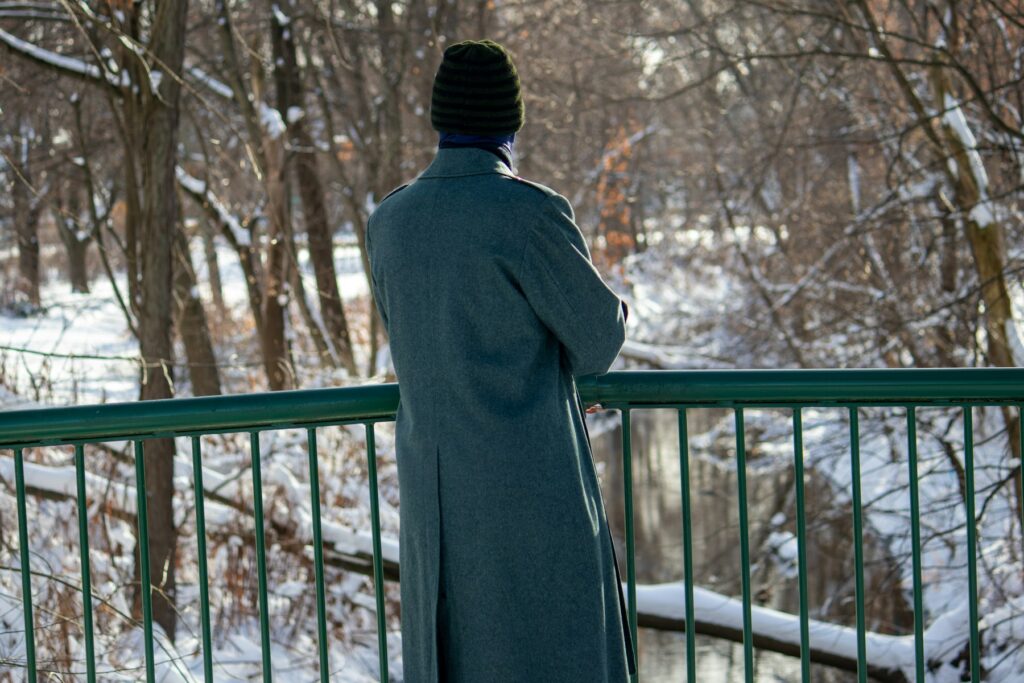
A knee-length overcoat in a heavy felted wool twill from Manteco, the mill in Prato, Italy, that specialises in recycled wool. The cloth is 425 gsm, dense enough to block wind and shrug off a light shower, and it is 100% recycled wool, cut and sewn in Portugal.
The shape is relaxed, with raglan sleeves that leave room for a thick knit or a blazer underneath and a cutaway collar that looks right turned up. Inside it is fully lined in viscose twill with bound seams, and it closes with corozo buttons. It is plain in the best way: the kind of coat that suits a suit, jeans and a hoodie equally well, and will not date.
- Heavy, wind-blocking 425 gsm wool
- Raglan sleeves leave room for layers
- 100% recycled, GRS-certified wool
- Not cheap at €500
- Wool needs a brush and an airing, not a washing machine
Schott 740 US Navy Peacoat
Schott has made peacoats in the United States for decades, and the 740 is the one modelled on the coat issued to the US Navy. It is cut from 32 oz melton wool, about as heavy as coat cloth gets, with a quilted nylon lining, anchor buttons and a tall collar that buttons right up under the chin.
It is short, boxy and very warm, and it is one of the few coats that looks better ten years in than on the first day. Buy your usual jacket size if you wear it over a shirt or a light knit; size up if you want a heavy jumper underneath.
- Very heavy 32 oz melton wool
- Made in the USA
- A design that has not dated in a century
- Heavy on the shoulders
- Short length leaves your legs exposed
- Priced in dollars; import duties may apply in the EU
The North Face 1996 Retro Nuptse
The Nuptse is the puffer the others are measured against. The 1996 Retro version keeps the original’s boxy, cropped shape and glossy ripstop shell, and fills those fat baffles with 700-fill recycled down: high-loft insulation that is very warm for its weight.
It is a city jacket more than a mountain one. It ends at the hip, so it is perfect for cycling and quick errands but leaves your legs out in properly cold weather. Wear it over a sweatshirt with wide trousers, or over tailoring if you like the contrast.
- 700-fill recycled down: very warm, very light
- The original boxy shape
- Easy to find in many colours
- Cropped, so not for the coldest days
- The shiny shell is not to everyone's taste
Canada Goose Langford Parka
If your winter includes weeks below zero, a long down parka is the answer, and the Langford is one of Canada Goose’s most recognisable. It is filled with 625 fill-power duck down, closes with a two-way zip so you can sit, cycle or drive in it, and has a down-filled hood you can adjust around your face.
The details are the ones you only appreciate in the cold: fleece-lined hand pockets, recessed rib-knit cuffs that stop wind running up your sleeves, and interior pockets that keep a phone battery warm. The cut is modern and fairly slim, so it looks less like expedition kit and more like a coat.
- Genuinely warm for sub-zero winters
- Two-way zip, fleece-lined pockets, rib-knit cuffs
- Slimmer, more modern cut
- Very expensive
- Too warm for a mild, wet winter
Barbour Classic Bedale Wax Jacket
Dame Margaret Barbour designed the Bedale in 1980 as a riding jacket, which explains its short length, rear vents and the drip strip inside that stops water running down to your waist. It is made from 6 oz waxed cotton that turns rain without any plastic membrane.
On its own it is a three-season jacket. Zip in Barbour’s optional liner and it will see you through most of a northern European winter. And it is built to be kept: the wax can be renewed every year or two, and Barbour runs its own re-waxing and repair service.
- Properly waterproof without a membrane
- Can be re-waxed and repaired for decades
- Short enough for cycling
- Needs re-waxing
- Not warm on its own in deep winter; the liner is extra
Uniqlo Seamless Down Coat
The best coat here for the money. Instead of stitching through the shell to make the quilted channels, Uniqlo bonds them, so there are no needle holes for wind to find or feathers to escape from. It is a long coat, about 95 cm from collar to hem in a medium, with a water-repellent finish, ribbed inner cuffs and a hood that comes off for a cleaner stand collar.
It will not last as long as a wool coat or a Barbour, and the water-repellent finish wears off with time. But it is warm, light and costs a fraction of anything else here.
- Long cut covers your thighs
- Bonded seams keep the wind out
- Removable hood
- The water-repellent finish is not permanent
- Harder to repair than wool or wax
Wool, down or wax?
Wool is the most versatile and the longest-lived. A heavy wool coat blocks wind, stays warm when damp and looks right with almost anything. Look at the weight of the cloth: anything above 400 gsm (about 14 oz) is a proper winter coat; the Schott, at 32 oz, is close to armour.
Down is the warmest for its weight. Fill power tells you how much loft the down has: 600 is good, 700 and above is excellent. Down hates being soaked, though, so in a wet climate you want a water-repellent shell and, ideally, some length.
Waxed cotton is the answer to rain rather than cold. It is genuinely waterproof, it gets better as it ages, and it can be re-proofed forever. Layer a knit or a zip-in liner underneath and it covers a mild winter on its own.

How to get the fit right
- Try a coat on over the thickest thing you will wear under it, not over a T-shirt.
- Reach forward and cross your arms. If the back pulls tight across the shoulder blades, go up a size.
- Sleeves should cover your shirt cuff completely with your arms at your sides.
- For a long coat, knee length is the most versatile: long enough to keep your legs warm, short enough to walk and cycle in.
Looking after it
Brush wool coats after wear and hang them on a broad hanger to keep the shoulders in shape. Dry-clean once a season at most. Wash down jackets rarely, on a gentle cycle with a down wash, and tumble dry on low with a couple of clean tennis balls to break up the clumps. Re-wax a waxed jacket every year or two, or send it back to Barbour to do it for you.
How we chose
We looked for coats that are honest about what they are made of, made from materials that last, and still sold by their makers year after year. We compared cloth weights, fill powers and construction, and read what long-term owners say after several winters. No brand paid to be included or saw this guide before it was published. Prices move a lot around Black Friday, so check the shop before you buy.